New Product - Environmental Cost Benchmark

Benjamin THOMAS
May 15, 2026

.png)
.png)
One question comes up regularly in our discussions with brands: “Are our products good? Are they better than the competition’s?” Until now, it’s been pretty difficult for a brand to know for sure.
This need has become more pressing in recent months with the gradual rollout of environmental labeling for textiles. Indeed, this new metric—the "environmental cost"—can be difficult to interpret for both consumers and brands internally:
Your customers don't know whether a score of 450 for a product is good or not. And your product teams are struggling to gauge how their results compare to the market.
WARO’s two new features address this lack of context and fundamentally change the way you measure and manage your environmental performance.
Until now, analyzing a product on WARO gave you an accurate result, but without a point of reference. It was hard to tell whether an environmental cost of 380 points was a good score, an average score, or a score that needed to be improved as a priority.
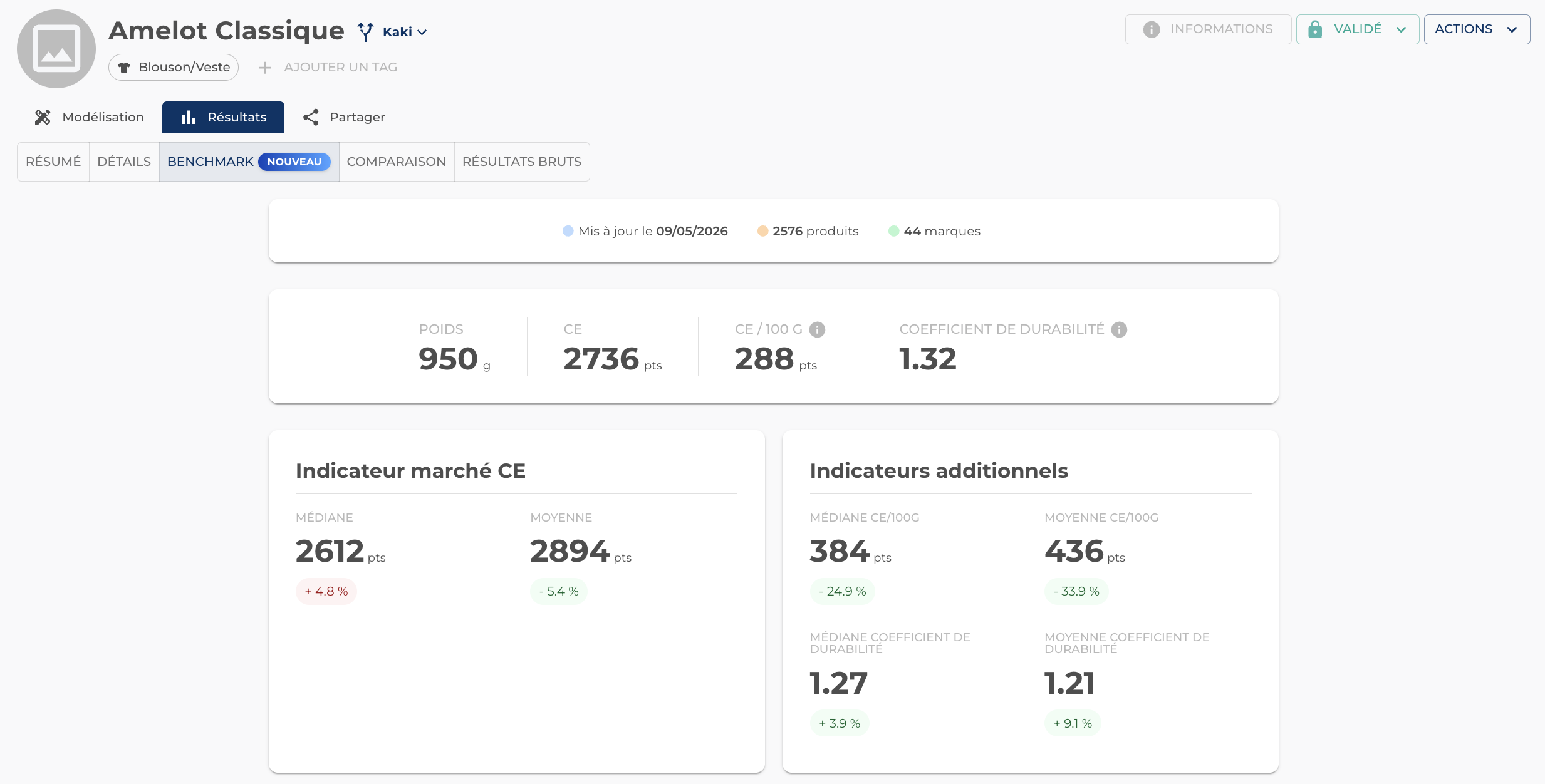
The textile market benchmark is now directly integrated into a product’s results page on the platform. At a glance, you can see how your product stacks up against market benchmarks in its category.
The Environmental Cost is a robust indicator, but for a consumer seeing it for the first time on a product label, it remains abstract. "450 points" means nothing without a point of reference.
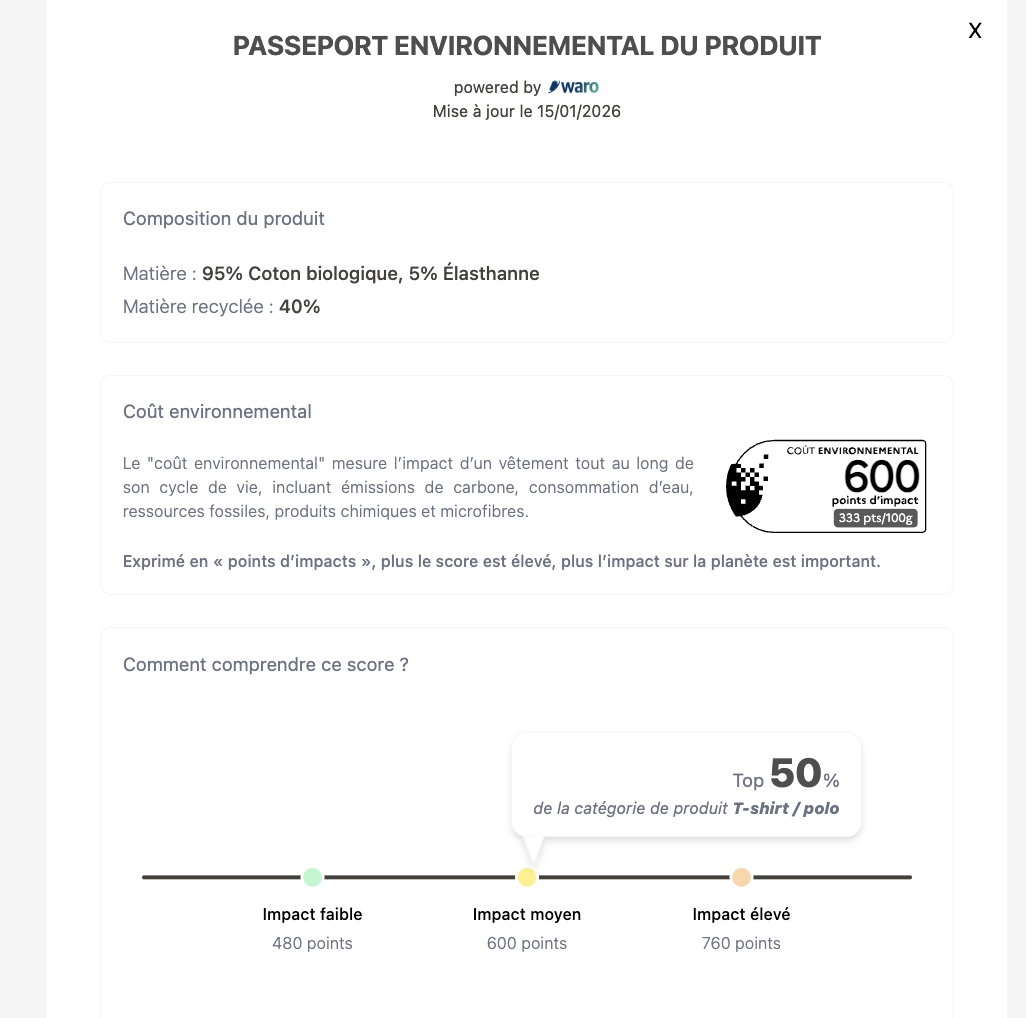
Market comparisons can now be directly integrated into the WARO communication module. You can choose to display, alongside your product’s Environmental Cost, its position relative to the textile market. Consumers can immediately see whether the product’s environmental impact is above, at, or significantly below the market average.
Do you have questions about setting up or using these features? [Contact your Customer Success Manager] or request a demo.


.png)
.png)
.png)
